Domestic vs. Brand Name: Do those “cheap” infrared tubes actually hold up?
If you’re running an industrial bread oven for 10 hours a day, you know the drill. Your heating elements are taking a beating. Constant heating, cooling, heating again. It’s brutal. I get asked all the time: Can a domestic infrared tube actually keep up with the expensive global brands, or am I just buying a headache? Here is the honest truth.
The battle of the filaments
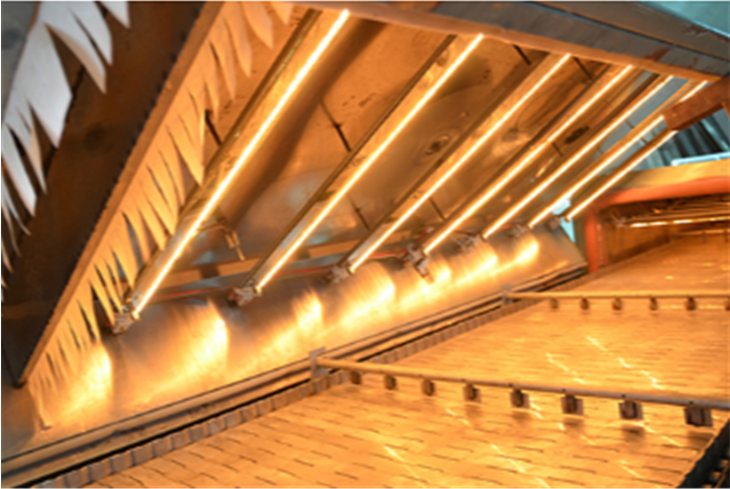
It really comes down to two things: the tungsten filament and the quartz glass. In a busy bakery, you can’t have your tubes bowing or cracking just because things got hot. You need that crust to be perfectly even every single time. We use high-purity quartz. When the materials are the same, the performance is basically the same. If your voltage is stable, a domestic tube will last just as long as the one with the fancy logo on the box.
Why some tubes just… die
Most of these are designed to be simple drop-in replacements. But the secret is in the seal where the electrode meets the quartz. If that seal is sloppy, gas leaks in. Once that happens, the filament oxidizes and burns out. It’s that simple. We spent a lot of time tightening those tolerances. The result? A tube that can handle a 10-hour shift without losing its punch.
A few things to watch out for
Swapping a brand-name tube for a domestic one is usually a breeze. But don’t just wing it. Double-check your footprint and your connectors. If the tube is even a tiny bit off, it won’t sit right in the bracket. That leads to hot spots, and nobody wants that. And a quick heads-up: if you’re pushing your tubes to max wattage, keep an eye on your wiring. Make sure your contactors can handle the current. We build these tubes to be tough, but they can’t fix a shaky electrical system. If your wiring is old, you might melt a terminal before the tube even breaks a sweat.